

Emotional Healing
How to Practice Self-Compassion When You Are Hard on Yourself
To practice self-compassion, treat yourself the way you would treat a dear friend who is struggling. Notice the pain without judging it, remember that struggle is part of being human, and offer yourself a kind word or a gentle touch. Start small, in the hard moment itself, and repeat it often.
What is self-compassion, really?
Self-compassion is the practice of turning toward yourself with the same warmth you would give someone you love. Researcher Kristin Neff, whose work is shared at self-compassion.org, describes three parts:

- Self-kindness instead of self-judgment. Speaking to yourself gently rather than harshly.
- Common humanity instead of isolation. Remembering that pain and imperfection are part of every human life, not proof that something is wrong with you.
- Mindfulness instead of over-identification. Noticing what you feel without drowning in it or pushing it away.
It is not self-pity, and it is not letting yourself off the hook. It is choosing to be on your own side while you grow.
Why is it so hard to be kind to yourself?
I have sat with so many women who can pour endless grace on everyone around them and almost none on themselves. When I ask what they say to themselves after a mistake, the words are often sharper than anything they would say to a stranger.

That harsh voice usually did not start with you. Many of us learned early that being hard on ourselves kept us safe. If I criticize myself first, no one else can surprise me. If I never rest, no one can call me lazy. Your inner critic is often an old protector still doing a job it was handed long ago.
If that voice has been loud lately, my post on how to change negative self-talk explores where those scripts come from.
How does self-compassion affect your nervous system?
Here is where the body comes in. Harsh self-talk is not just a thought. Your body hears it as a threat. The jaw tightens, the breath gets shallow, and the nervous system leans toward fight or flight, even if you never move from your chair.

Kindness sends the opposite message. A gentle word, a hand on your chest, a slower breath all tell your body that it is safe enough to soften. The Greater Good Science Center describes self-compassion as a way of relating to yourself with care in hard moments, and many people find it feels physically different from criticism.
You are not too much. You are not too sensitive. You are a body learning that it does not have to brace against itself.
How do you practice self-compassion day to day?
Self-compassion is less a feeling you wait for and more a practice you return to. Here are gentle places to begin:

- Catch the moment. When you notice the inner critic, pause and name it: "This is a hard moment."
- Remember you are not alone. Say quietly, "Other people feel this too." Struggle connects you to others; it does not set you apart.
- Offer a kind gesture. Place a hand on your heart or your cheek. Touch speaks to the body faster than words.
- Use a friend's words. Ask, "What would I say to someone I love right now?" Then say that to yourself.
- Let feelings be real. Self-compassion is not pretending everything is fine. If you have ever felt pressured to look on the bright side, my post on toxic positivity and why it can feel unsafe explains why honesty matters.
- Begin again, without a lecture. When you slip back into harshness, simply return. Returning is the practice.
If guilt is the heaviest part of your inner weather, you might also find comfort in my post on how to forgive yourself.
Is self-compassion the same as self-esteem?
Not quite. Self-esteem often depends on how well you are doing, so it can rise and fall with success. Self-compassion does not have to be earned. It is there on the days you shine and on the days you fall apart.

That is why it can feel steadier. You do not have to be impressive to deserve kindness. You only have to be human.
When should you ask for support?
If your inner critic feels relentless, if you feel hopeless, or if harsh thoughts start to turn toward hurting yourself, please reach a physician or licensed mental health professional right away. In the United States you can call or text 988 to reach the Suicide and Crisis Lifeline at any hour.
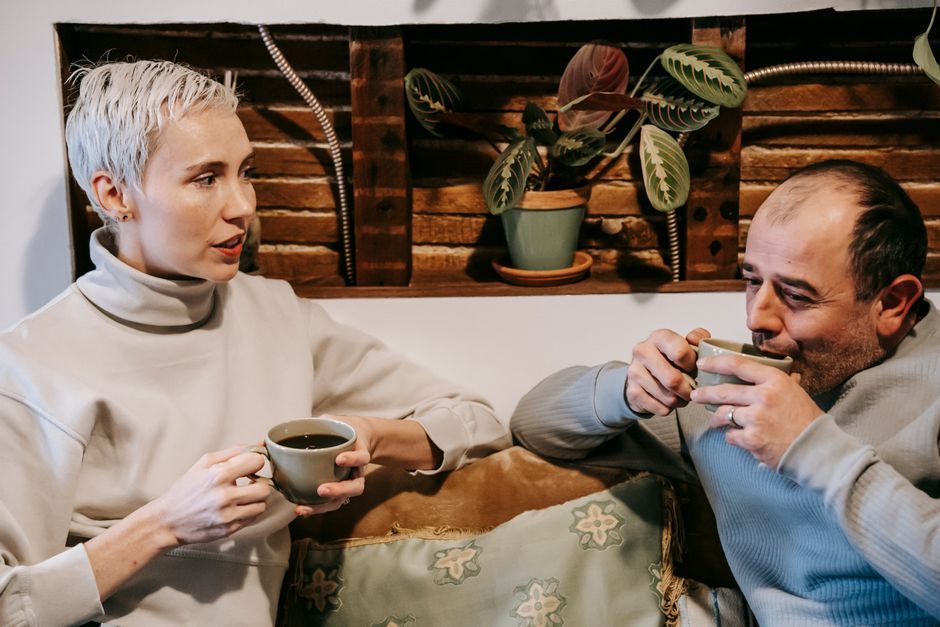
And if you are simply tired of carrying so much on your own, my page on emotional overwhelm and nervous system support explains how I walk alongside people learning to feel safe in their own skin.
Pause for Reflection
Place a hand on your heart and take one slow breath in and a longer breath out.

What is one thing you said to yourself this week that you would never say to a friend? What would it sound like to say the kinder version, right now, out loud or in a whisper?
"The LORD is merciful and gracious, slow to anger, and plenteous in mercy" (Psalm 103:8, KJV). If He is this gentle with you, you are allowed to be gentle with you too.
FAQ
How do you practice self-compassion?
Notice when you are struggling, remind yourself that struggle is part of being human, and offer yourself the kind words or gentle touch you would give a friend. Practice in small moments and return to it often.
What are the three parts of self-compassion?
Kristin Neff describes three parts: self-kindness instead of self-judgment, common humanity instead of isolation, and mindfulness instead of over-identification with painful feelings.
Is self-compassion selfish?
No. Self-compassion is about relating to yourself with care so you can keep growing. Many people find that when they are gentler with themselves, they have more patience and warmth left for others.
How do I start working with you?
If you would like to talk through whether this is a fit, you can send me a message through my contact page, and we can look at gentle next steps together.
This article is for educational purposes and is not medical advice. It is not intended to diagnose, treat, cure, or prevent any disease. Please work with a qualified practitioner, and consult your physician before making changes to your health routine.
In Renewal,
Lynette Wing
Founder of Renewal Health
Clinical Homeopath, Naturopath, Mind-Body Practitioner
Dedicated to root-cause healing and whole-person alignment. Guiding clients to emerge, align, and live fully, restoring vitality, clarity, and sustainable wellness. About Lynette