

Emotional Overwhelm
How to Cope With Uncertainty When Your Body Wants Answers
You cope with uncertainty by calming your body first and your thoughts second. The unknown often feels like danger to a nervous system that wants a plan, so it keeps you scanning for answers. Steadying your breath, shrinking your focus to today, and naming what you can control helps your body feel safe enough to wait.
Why is uncertainty so hard on the body?
There are seasons when waiting feels harder than bad news would. Waiting on test results. Waiting to hear about a job. Waiting to see whether a relationship will hold. Your mind keeps writing the next chapter, and your body keeps bracing for it.

This is not a character flaw. Your nervous system was designed to keep you safe, and one of the ways it does that is by predicting what comes next. When it cannot predict, it often treats the gap as a threat. I call this living in a sympathetic lock: the body stays switched on, scanning and ready, long after the moment that switched it on.
The National Institute of Mental Health describes how ongoing stress can show up as worry, tension, headaches and trouble sleeping. Uncertainty is one of the quietest ways that kind of stress settles in, because there is no clear finish line.
Why does not knowing feel worse than knowing?
When you know what you are facing, your body can make a plan. When you do not know, it tries to prepare for every possibility at once. That is exhausting.

You might notice it as:
- Replaying and rehearsing. Running the same conversation or outcome over and over.
- Checking. Refreshing your email, your phone, the news, the portal.
- A tight chest or belly. The body holding its breath, waiting.
- Trouble resting. Lying down, but never quite landing.
If you tend to jump straight to the worst outcome, my post on why you always expect the worst goes deeper into that pattern.
How do you calm your body when you do not know what is next?
Your body is the last to believe the good news, so it needs to be spoken to in its own language. Logic alone rarely settles a braced body. These practices give it a different message:

- Lengthen your exhale. Breathe in gently through your nose, then breathe out a little longer than you breathed in. A longer exhale is one of the simplest signals of safety you can send.
- Find the ground. Press your feet into the floor and notice what is holding you up right now, the chair, the bed, the earth.
- Shrink the window. Ask, "What do I need for the next hour?" instead of "What will happen this year?"
- Name it to tame it. Say, "I am waiting, and waiting is hard." Naming the feeling gives it edges.
- Set a checking boundary. Choose one or two times a day to check for news, and let the rest of the day belong to you.
What can you control when so much is uncertain?
Here is the hammer line: you cannot control the outcome, but you can tend the person waiting for it.

Try writing two lists. On one side, everything you are waiting on. On the other, what is still yours to tend: how you sleep tonight, what you eat, who you call, whether you go outside, how you speak to yourself. That second list is where your energy belongs.
Be gentle with yourself as you practice. If your inner voice turns harsh while you wait, my post on how to practice self-compassion offers kinder words. And if past hurts make it hard to trust that things can turn out well, you might read how to trust again after being hurt.
When is it time to ask for more support?
Please reach out to your physician or a licensed mental health professional if worry is keeping you from sleeping, eating or working most days, if it has lasted for weeks, or if you feel hopeless. If you ever have thoughts of harming yourself, call or text 988 in the United States to reach the Suicide and Crisis Lifeline, or call 911 in an emergency.

If you would like a practitioner to walk with you through a season of overwhelm, my page on emotional overwhelm and nervous system support explains how I work.
Pause for Reflection
Place one hand on your heart and one on your belly. Take one slow breath in and a longer breath out.
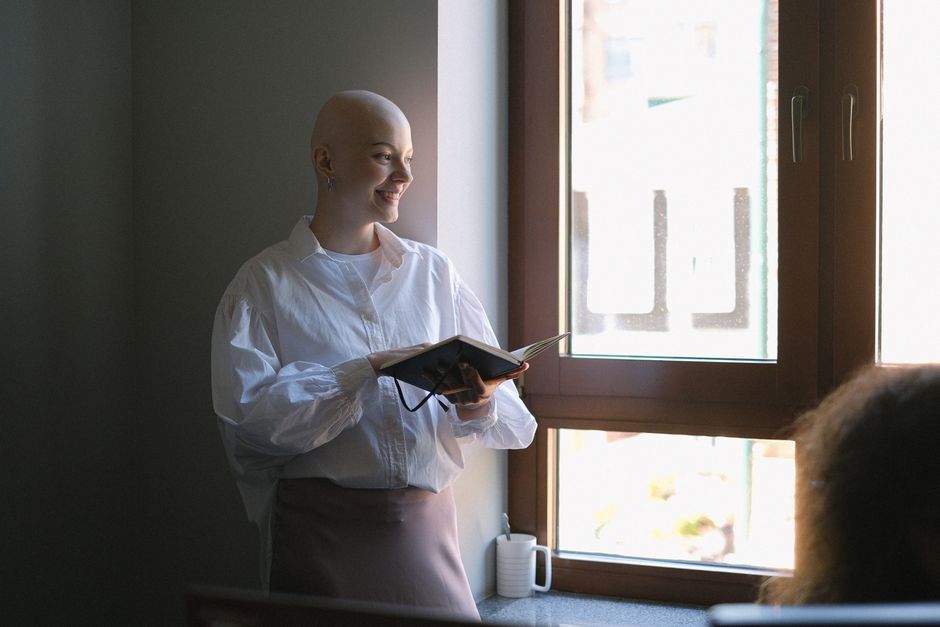
What are you waiting on right now? What is one thing on your "still mine to tend" list that you could do for yourself today?
"Thou wilt keep him in perfect peace, whose mind is stayed on thee: because he trusteth in thee" (Isaiah 26:3, KJV). You do not have to know the ending to be held in the middle.
FAQ
How do you cope with uncertainty and anxiety?
Start with your body: slow your exhale, feel your feet on the ground, and shrink your focus to the next hour. Then name what you can still tend, like sleep, meals and connection. If anxiety lasts for weeks or disrupts daily life, talk with your physician or a licensed counselor.
Why does uncertainty make me so anxious?
Your nervous system is designed to predict what comes next. When it cannot, it often treats the unknown as a threat and stays on alert, which can show up as worry, tension and trouble sleeping.
How do I stop checking my phone while I wait for news?
Choose one or two set times each day to check, and put the phone in another room the rest of the time. Each time the urge rises, take one slow breath and remind yourself that the news will still be there at your next check.
How do I start working with you?
If you would like to talk through whether this is a fit, you can send me a message through my contact page, and we can look at gentle next steps together.
This article is for educational purposes and is not medical advice. It is not intended to diagnose, treat, cure, or prevent any disease. Please work with a qualified practitioner, and consult your physician before making changes to your health routine.
In Renewal,
Lynette Wing
Founder of Renewal Health
Clinical Homeopath, Naturopath, Mind-Body Practitioner
Dedicated to root-cause healing and whole-person alignment. Guiding clients to emerge, align, and live fully, restoring vitality, clarity, and sustainable wellness. About Lynette