

Generational Healing
Generational Grief: When a Family Covers the Mirrors
Generational grief is loss that a family never had the room, the safety, or the language to process, so it gets passed down instead of healed. It rarely arrives as a story. It arrives as an atmosphere: silence around certain subjects, a habit of shrinking, and a body that braces when attention turns its way.
What is generational grief?
Some stories enter a family line so quietly that no one realizes they have become part of the architecture. They settle into the walls and into the nervous systems of the children who grow up inside them.

In many families there is an emotional epicenter: a sudden loss, a rupture, a secret no one could speak about. It may have happened decades before you were born. You may not know the details, or even that it happened at all. But your body knows. It feels the echo.
Grief itself is not the problem. The American Psychological Association describes grief as a natural response to loss that can affect us emotionally and physically. What becomes generational is the grief that was never allowed to move.
How does grief get passed down through a family?
Mostly through what is modeled, not what is taught.

In my book I describe a family where, after a loss the mother could not bear, every mirror in the house was covered. Not for a day of mourning, but indefinitely. The clocks were stopped. Time was effectively frozen, and identity was veiled. It was not a ritual. It was a survival response from a heart too shattered to look at a life that kept going without the one she loved.
But the children in that house learned a lesson no one ever said out loud: "It is safer not to be seen."
That lesson can travel for generations. It sounds like quiet inner rules:
- My presence is too much for this fragile room.
- My voice is too loud for this sorrow.
- My needs are an inconvenience to people who are already grieving.
- It is safer to disappear.
A child raised beside unprocessed grief does not need to be told to stay small. Their nervous system simply learns that smallness keeps the peace. You can read more about how these inherited rules form in survival scripts you never agreed to.
How does generational grief show up in the body?
Often before it ever shows up in words. People carrying this kind of inheritance commonly describe:

- Throat tightness: a constriction when you try to voice an opinion.
- Chest collapse: a caving-in sensation when attention turns toward you.
- Limb heaviness: feeling drained the moment you step into leadership or influence.
- Instinctive shrinking: a posture that folds inward and feels like second nature.
Many traditions associate the lungs and upper chest with grief and the act of letting go. Whether or not you hold that view, it is worth noticing how often inherited sorrow comes with shallow breathing, frequent sighing, or a sense of carrying a weight on the chest.
Symptoms like these are not flaws. They are messengers. One everyday form this takes is the apology reflex, the automatic "sorry" for taking up space. And anything your body learned for survival, it can gradually unlearn in the sanctuary of safety.
How do you begin to heal generational grief?
Gently. Healing begins the moment you lift the cloth from your own reflection, and it does not require force, pressure, or perfection. Only curiosity and compassion.

Name what was never named. If you know the family story, write it down. If you do not, write what you sense: "Something happened here that no one could speak about."
Let the body lead. When your throat tightens or your chest folds, pause. Put a hand where you feel it and breathe low and slow into your belly. You are telling your body the room is safe now.
Grieve what is yours to grieve. Some of this sorrow belongs to you, and it deserves tears, rest, and time. Some belongs to people who came before you, and you can honor it without carrying it.
Practice being seen in small doses. Share one honest opinion. Let one person help you. Each moment of visibility your body survives becomes evidence that the old rule has expired.
Do not do it alone. "The Lord is close to the brokenhearted and saves those who are crushed in spirit" (Psalm 34:18). You were never meant to carry this by yourself. Support for the nervous system side of this work is the heart of emotional overwhelm and nervous system support, and you can begin a conversation through the contact page whenever you are ready.
Some in a family carry the story, some carry the silence, and some carry the invitation. If you feel it, it is not because you are fragile. It is because you are strong enough to hold the light to it.
Pause for reflection
Take a slow breath and let your shoulders drop away from your ears.
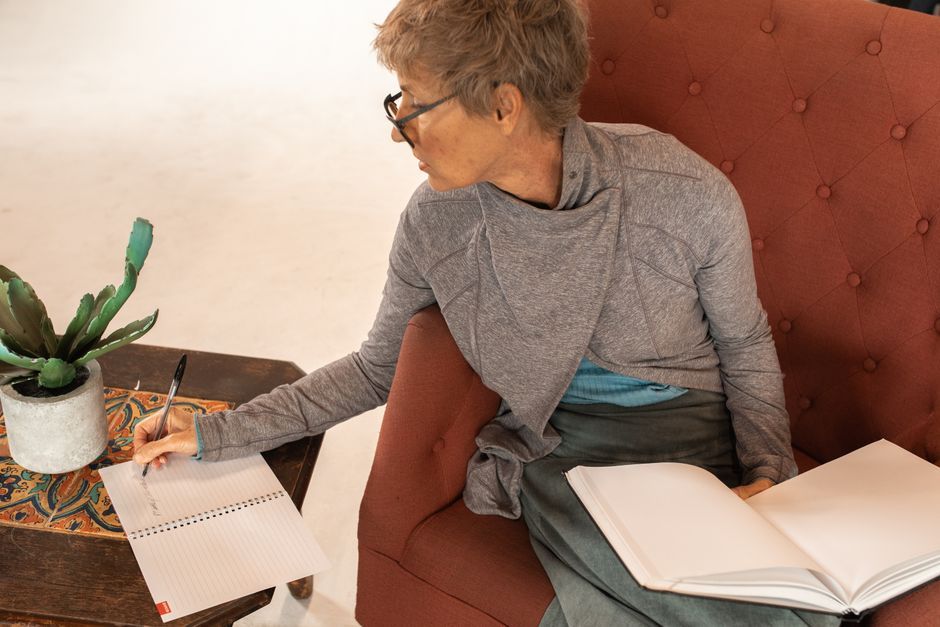
Ask yourself gently: Where in my life do I still feel the urge to hide or make myself small? What if that urge is not a flaw, but a story I inherited that is no longer true for me?
You are not the shadow of the past. You are the light returning to the room.
FAQ
Can you grieve a loss you never experienced?
Yes, in the sense that you can carry its effects. Many people feel a sadness or heaviness that does not match their own life, and it often makes more sense once they learn what their family lived through.
How do I know if my sadness is inherited or my own?
Ask whether the feeling fits your present circumstances. If it feels older, heavier, or more familiar than the situation in front of you, it may be worth exploring the family story. The idea of a core inherited pattern is explored in the master thread.
When should I get professional help for grief?
If grief comes with persistent hopelessness, trouble functioning day to day, or any thoughts of harming yourself, please speak with your physician or a licensed mental health professional, and in a crisis contact emergency services right away. MedlinePlus has a helpful overview of bereavement and grief. Support like mine sits alongside that care, never in place of it.
This article is for educational purposes and is not medical advice. It is not intended to diagnose, treat, cure, or prevent any disease. Please work with a qualified practitioner, and consult your physician before making changes to your health routine.
In Renewal,
Lynette Wing
Founder of Renewal Health
Clinical Homeopath, Naturopath, Mind-Body Practitioner
Dedicated to root-cause healing and whole-person alignment. Guiding clients to emerge, align, and live fully, restoring vitality, clarity, and sustainable wellness. About Lynette